When it comes to college readiness, we’ve long looked to students’ academic achievements as indicators of acquired foundational skills needed for success. But college success is about much more than high test scores or earning As.
Success also depends on how students approach learning: can they assess information, navigate uncertainty or take ownership of their progress? These skills are part of a pivotal college essential: knowing what it takes to be accountable.
Critical thinking has always been important, but never more than in today's AI-driven world. When students can access answers in just a few clicks, the real value of learning lies in being able to recognize when something doesn’t make sense and decide what to do next. Yet those are precisely the accountability skills many students are still learning when they arrive on campus.
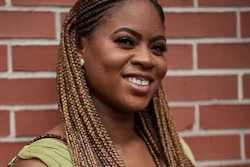
 Nhaim Khoury
AI makes independent thinking more important
When technology can produce answers instantly, education’s value shifts toward the human process of learning – reasoning through how an answer was reached, evaluating if makes sense and knowing when to challenge it. That requires students to have foundational knowledge to question when an AI-generated output appears wrong, rather than just assuming the AI got it right.
That process can be easy to skip with AI at our fingertips. A student might use the technology in useful ways, like getting additional practice questions or comparing explanations to the same problem. But in instances where AI is used to create a study guide, for example, students then miss the opportunity for critical thinking and breaking down their own learning. Similarly, in the process of taking notes, it shouldn’t be simply about recording the answer. Students should be observing how an instructor breaks down a problem, noting that process and then learning to dissect it in their own time.
The classroom is designed for much more than course content
College requires more than mastering course content. Students must learn how to prepare, ask questions, recognize when they don't understand something, balance priorities across school, extracurriculars, work and family, consider feedback, collaborate with others, communicate effectively, and recover when their first approach doesn’t work. Even asking for help is a learned skill.
But who's responsible for developing those skills isn’t always clear. Seventy percent of employers believe students hold primary responsibility for preparing themselves for the workforce, according to Cengage’s 2026 Graduate Employability Report. Yet 62% of instructors say they have had to do more in recent years to prepare students for entry-level employment, and 42% see themselves as primarily responsible for that preparation.
 Theresa Carlson
For students to carry those skills beyond the classroom, however, they need to recognize they are developing them. A student in an introductory course may not immediately see how foundational coursework connects to life after college. Educators can make that connection clearer by showing how the competencies embedded in coursework translate into what students will experience after college.
Students need to practice being wrong
A disappointing test score or unexpected feedback can be part of the learning process. When something doesn’t go as planned, what matters is what students do next. Consider a chemistry lab where a student’s results have an 18% error when the target is 1%. Simply telling the student where the problem is takes away an important part of the learning process. Instead, students must be allowed to reassess their work, re-examining their procedure, calculations, equipment limitations, or assumptions in the experiment, determine where in the process they went wrong, and learn from it.
Students also need opportunities to keep trying. Learning how to recover from failure, revise an approach and move forward is an invaluable lifelong skill. Failure needs to be a real option in the classroom, not positioned as inherently bad, so students can recover from their mistakes in a safe, controlled learning environment.
AI adds another dimension to this challenge. If a student becomes accustomed to relying on AI for answers, rather than working through a problem themselves, they can miss opportunities to make mistakes and learn how to recover from them. In the workforce, mistakes are also unavoidable and what matters is how employees correct those mistakes and learn from them. This emphasizes the need for classrooms to provide a supportive space for students to get things wrong and learn how to respond when that happens.
Redefining what "college ready" means
Knowing what it takes to be accountable may be a pivotal college essential, but it shouldn’t be an unspoken one. Too often, students are expected to arrive at college already knowing how to learn. Institutions and educators can be more intentional about cultivating skills like preparation, effective studying, collaboration, communication and using feedback.
Preparing students for a changing workforce must go beyond job preparation itself. Higher education must help students learn how to learn, develop post-college skills and provide space to grow into independent thinkers. As AI changes the skills employers need and creates uncertainty around entry-level work, that broader experience becomes more valuable.
Students still have agency in shaping what comes next. Higher education can help them exercise it by making clearer connections between what they learn, the capabilities they develop and the goals they want to pursue, equipping students not only for their first job, but for career-long success.
Nhaim Khoury currently serves as the president, Higher Education and School at Cengage. He oversees Sales, Revenue Operations, Editorial & Learning and Content & Portfolio worldwide for Higher Education and School, with additional matrixed leadership across Product, Technology, Marketing and Finance. In this role, Nhaim is accountable for defining and delivering the mission, strategy, priorities and success metrics across global Higher Education and K-12 markets, serving learners, educators and librarians across the education continuum. His portfolio includes learning platforms powering secondary and post-secondary curriculum, as well as English language learning, library and college and career readiness solutions.
Theresa Carlson is a chemistry professor at Cuyamaca College, where she currently teaches introductory and general chemistry courses. Throughout her teaching career, she has taught across a broad range of the chemistry curriculum, including introductory chemistry, general chemistry, organic chemistry, biochemistry, physical chemistry, and analytical chemistry. This range of experience has given her a broad perspective on how students develop their understanding of chemistry as they progress from foundational concepts into more advanced coursework.