Millions of students will arrive on college campuses prepared to question what they know.
They will examine evidence that complicates their assumptions. They will meet people whose experiences challenge their understanding of the country and the world. Some of those encounters will be uncomfortable. That is not a failure of higher education. It is one of its greatest gifts.
Yet as students return to campus this fall, they will enter institutions facing growing pressure over what may be taught, which research deserves public support, and increasingly, who gets to decide how colleges fulfill their educational mission.
The political debate is often framed as a fight over Diversity, Equity, and Inclusion in an effort to protect individuals from ideological coercion. That framing misses the larger story. Beyond ideological debates lies a deepening concern over government intervention, where colleges must constantly adapt to vague, moving standards of success and compliance, driven not just by official authority, but by financial threats and political pressure. The question is no longer whether colleges should be accountable. They should. The question is who gets to decide what ideas, scholarship, and educational priorities deserve legitimacy.
Education Secretary Linda McMahon asked colleges and universities to publicly commit to a sweeping set of reforms touching admissions, faculty hiring, grading, student discipline, foreign funding, and institutional governance. The administration describes the effort as a way to restore public trust in higher education.
Reasonable people can debate those proposals individually.
Viewed alongside accreditation directives, federal investigations, funding disputes, and state efforts to reshape curriculum and institutional governance, however, they reveal a larger trend.
The federal government is increasingly asserting its funding and political leverage to determine how colleges should exercise academic judgment and what students should be taught to think.
That is not protection from ideology. It is the substitution of one set of political judgments for another.
President Donald Trump directed the Education Department to reshape accreditation around what the administration called "intellectual diversity." House Republicans recently questioned leaders of medical schools about admissions policies and curricula while Justice Department investigations into medical schools continued to expand. In Texas, professors were denied university funding to attend an academic conference because of the state's anti-DEI law.
Each action involves different institutions and different legal questions. Together, they illustrate a broader shift.
Political leaders are increasingly deciding which academic priorities deserve government support and which institutional decisions warrant government intervention.
Americans can disagree about the merits of any individual policy. What should concern us is their cumulative effect.
Political pressure changes institutions long before formal censorship occurs.
Faculty members avoid research likely to invite scrutiny. Administrators quietly abandon programs before anyone orders them to do so. Students notice which questions carry professional or political risk. Decisions once guided primarily by educational judgment become exercises in anticipating government response.
The result is not a campus free from indoctrination. It is a campus increasingly shaped by political power. That should concern everyone, regardless of party.
Every administration believes its priorities reflect common sense. Every political movement believes it is correcting someone else's excesses. That is precisely why higher education has long depended on a measure of institutional independence.
Colleges are not valuable because they produce agreement. They are valuable because they cultivate judgment.
Their purpose cannot be reduced to preparing students for their first job, important as career preparation is. They also teach students to distinguish evidence from assertion, communicate across differences, challenge assumptions, and reconsider conclusions when the facts demand it.
Throughout my career, I have watched students arrive on campus, certain they understood how the world worked. Their most meaningful education often began when that certainty gave way to curiosity.
A professor challenged an assumption. A classmate offered a perspective they had never considered. A course revealed that a familiar story was more complicated than they had imagined.
That is the work of education, not indoctrination.
Higher education must be willing to confront its own ideological blind spots. But replacing campus-driven conformity with government-directed conformity is not progress. It is just a different form of overreach.
As students return this fall, we should ask what kind of graduates our democracy needs.
Do we want people trained to repeat the conclusions favored by whoever currently holds power? Or do we want them prepared to examine evidence, identify contradictions, challenge authority, and reach conclusions of their own?
When we expose students to diverse experiences and help them navigate challenging ideas and competing perspectives, we expand—not limit—their capacity to think independently.
The real fight over higher education is larger than the culture wars regarding DEI.
It is a fight over whether colleges will remain places where ideas are tested rather than prescribed, where disagreement leads to inquiry rather than punishment, and where students are trusted to think for themselves.
That freedom has never belonged to one ideology.
It belongs to all of us, the students who will one day lead this country, the researchers who will create innovation by asking who has been left out of the conversation, and a democratic government built to serve the people, not silence them.
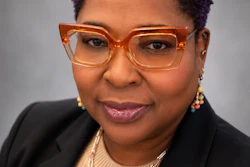
Emelyn A. dela Peña, Ed.D., is president and CEO of the National Association of Diversity Officers in Higher Education (NADOHE). A nationally recognized higher education leader, she has spent more than three decades advancing student success, inclusive excellence, and institutional leadership across public and private colleges and universities. Her work focuses on helping higher education fulfill its mission as a catalyst for opportunity, civic engagement, and academic excellence.