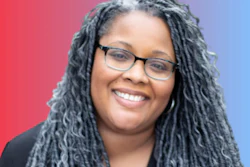
Dr. Evan Kropp thinks a lot about who adult learners are and what they actually need from the institutions they trust with their time and money in his role as executive director of distance education at the University of Florida’s College of Journalism and Communications. Like many leaders across higher education, he is particularly focused on the more than 40 million Americans who hold some college credit and no degree — people who came to higher education with real goals, encountered systems that weren't built for them, and left without the credential they came for.
For this group of students, he believes, online education can be a vehicle for access and an equalizer of opportunity in ways it isn’t necessarily for 18 to 22-year-olds who are going to school for the first time and still need more hands-on guidance.
“I think you’ll find people who will disagree with me on that one,” he admitted in a recent interview.
But for working professionals, caregivers, veterans, and career-changers, Kropp said institutions would do well to realize that these are people for whom a single misaligned enrollment decision has consequences that ripple across their finances and their families. Institutions must actually examine their systems — their enrollment practices, their credit transfer policies, their advising structures — and ask honestly whether those systems are built for the students who need them most, he said.
Shifting the Focus from Enrollment to Student Goals
“The first thing that needs to change from the business of education is that we are talking to students about their goals from education,” Kropp said. “We need to talk to prospective students openly and honestly about what we offer as a program, what their goals are, and whether or not enrolling aligns with their goals. "Enrolling for enrollment's sake does no one any good.”
In Louisiana, higher ed leaders are balancing similar tensions from a different side of the coin: Reconciling the fact that while institutional budgets stand to benefit from unclear transfer pathways, students lose when the state’s institutions do not come together to agree on a shared core curriculum and direct transfer pathways.
Dr. Tristan Denley, executive vice commissioner for academic affairs and innovation at the Louisiana Board of Regents, said it's really about "recognizing that what is best for the student is really best for the state and institution as well."
Like Kropp, Denley is also thinking intentionally about adult learners, and specifically the critical part they play in the state’s attainment goals. For those who have started and stopped and re-enrolled at other institutions across the state, having a clear ability to carry their credits from one institution to the next is key.
Protecting Vulnerable Students and Aligning with Industry
But it’s not just adult learners for whom clear transfer pathways make sense. Denley said, “Inconsistency in transfer really does impact lower-income students and first-generation students more” — they are the ones for whom missteps and duplication are most costly.
That principle has translated into universal transfer pathways across the 24 most-enrolled majors in Louisiana, a system in which students can be guaranteed that credits earned at one institution will count toward a degree at another, and a data platform designed to identify the gaps that still remain. Next up, Denley said, is an effort to align student interests with the industries that are in highest demand — and receiving the greatest financial investment — in the state to help students not just earn credentials but secure meaningful and fruitful career options.
Denley and Kropp are focused on different solutions, but their fundamental thinking about putting students first shows up in institutional rhetoric often but is rarely evident in institutional policies. And as higher ed continues to grapple with an enrollment cliff that is as much about a decline in confidence in institutions as it is fewer 18-22 year-olds in the country, what will set apart the institutions that will survive from those that won’t will be the ability to adapt, Kropp said.
Overcoming the Status Quo
“All of our systems need to be established to support our students, our learners in whichever stage of life that they’re coming to us, and we need to acknowledge that their needs might be different and their stages of life might be different,” said Kropp.
The status quo communicates that "the system wasn't built for you," he said. Whether or not institutions mean to send that message, many of their systems confirm it.
“You hear the people that are traditionalists trying to maintain higher education, and then you get people that are saying, ‘nah this doesn’t work, and we need to change. And not only do we need to change, we need to change quickly,’” he said.
And that can’t include holding onto old systems, he added.