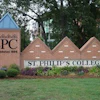
That was the ANDers Summit, held recently at the Richard J. Ernst Community Cultural Center. Billed as a working session for change and pathways to possibility, we spent the day sketching out what it would take for institutions to stop designing around the eighteen-year-old who lives in a dorm and start designing around the student who is actually enrolled.
That student now has a name. National University coined the term “ANDers” to describe learners who are parents and students, employees and students, deployed and students, caregivers and students, all at the same time.
“At National University, we have adopted the term ‘ANDers’ to give a name to learners who are balancing education and one or more key responsibilities, such as work, parenting, military service, child or parent caregiving, and more,” said NU President Dr. Mark Milliron. “ANDers have responsibilities that extend well beyond the classroom.”
The math behind the term isn’t abstract. Roughly seven in ten college students today are working while enrolled. More than four in ten are older than twenty-two. Nearly one in five is raising a child at home. Three in ten are the first in their family to set foot on a campus. And more than 43 million Americans have started a degree and stopped—not for lack of ability—but because the institution never adjusted to fit the life they were living. When National University launched the ANDers Movement last fall, Milliron said that the initiative “celebrates the strength, ambition, and determination of millions of nontraditional students, and reflects our commitment to evolving higher education to meet the realities of today's learners.”
That is the right instinct. The problem is that most of the sector still isn't built for it.
Walk onto most campuses, and the architecture still assumes a single kind of student. Registration windows that open mid-shift. Advising hours that close at 5:00 p.m. sharp. Financial aid processes that treat a military deployment or a custody schedule as an exception rather than a design constraint. We’ve built a system for the student who lives down the hall from their classes, then act surprised when the father working two jobs and squeezing in coursework between school pickups, falls off the completion rolls. He didn't fail college. The college failed to notice he existed.
What struck me the most at the ANDers convening, wasn't the diagnosis but watching people from different corners of the higher education ecosystem converge, without much prompting, on the same fixes. They suggested stackable credentials that count toward something the moment a student has to stop; college advising built around a working adult’s calendar instead of a registrar’s; credit for prior learning that actually rewards what a student already knows from the job or the service branch, instead of making them prove it twice; childcare, mental health access, and career services treated as core infrastructure rather than a grant-funded pilot that vanishes in year three.
None of that is radical. It is overdue. Community colleges like NOVA—under the leadership of Dr. Anne M. Kress—have understood the ANDer for decades, because they never had the luxury of pretending their students were anyone else. What the ANDers movement offers the rest of higher education is a vocabulary and a mandate to catch up. Naming a population is not a small thing. It tells millions of people that their unfinished degree was, more often than not, an institutional failure and not a personal one.
By the end of the session, that wall of sticky notes had turned into something closer to a blueprint. Childcare stipends tied to registration. Advising blocks scheduled around shift work. Prior learning assessments built into the first week of enrollment, not the third year. None of it requires new technology or a federal mandate. It requires an institution willing to admit that the student in the brochure retired years ago, and that the one filling out the FAFSA at midnight between a shift and a kid's bedtime is who actually shows up. Building around that fact is the work now in front of higher education.
Dr. Jamal Watson is a higher education consultant, professor and associate dean of Graduate Studies at Trinity Washington University and the author of this bi-weekly column. Watson is the former executive editor of Diverse: Issues In Higher Education (now The EDU Ledger) and is the author of The Student Debt Crisis: America’s Moral Urgency (Broadleaf Books, 2025).