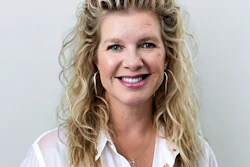
Dr. Chance W. Lewis, the Carol Grotnes Belk Distinguished Professor of Urban Education at the University of North Carolina at Charlotte, launched the gathering in 2014 and still leads it through the university’s Urban Education Collaborative.
“I'm very hopeful,” he said, noting that the incoming majority appears more interested in funding public schools than in diverting taxpayer dollars to vouchers for private and religious institutions. “We lost a lot of ground.”
Over the past two years, Washington cut education programs and championed private school vouchers, and urban districts absorbed much of the damage. The new Congress has a chance to reverse course. Restoring lost dollars, though, will not be enough. Urban schools need investment aimed at what reaches children directly: rigorous coursework, adults who expect them to succeed, support for the hardships they carry into the classroom, and proven models that can grow. Lawmakers will deliver that only if educators, parents and community leaders hold them to it.
Dr. James L. Moore III, the EHE Distinguished Professor of Urban Education at Ohio State University and a former assistant director for STEM education at the National Science Foundation, laid out the problem in his rousing keynote.
“In this country, we say everyone should have access to an education,” he said. “But we have not made the decision that everyone will have a quality education.”
Moore described one South Carolina county where the most advanced math course offered was algebra, leaving students with no realistic route to the state’s flagship university.
Expectations, he warned, matter as much as course catalogues. Moore once asked roughly 100 urban teachers how many would send their own children to the schools where they taught. Two raised their hands. He cited research showing that Black students are more likely to be recommended for gifted and advanced coursework when their teacher shares their background, and he reached back to Dr. Carter G. Woodson, who warned in 1933 that once a man is made to feel inferior, “you do not have to compel him to accept an inferior status, for he will seek it himself.” Too many urban students hear that message from well-meaning adults, including school counselors, who quietly steer them away from college.
Moore and Lewis are candid that money alone won't close these gaps. Some urban districts already spend more per pupil than nearby suburbs, yet much of it covers needs that never reach the classroom. A child who walks past the spot where a friend was shot, or who shares a cramped apartment with two other families, brings burdens to school that no lesson plan can address on its own. Moore calls this “educational vulnerability.” Federal dollars should target it directly, paying for counselors with manageable caseloads, social workers, and mental health support.
That distinction got lost in this fall’s uproar over Nikole Hannah-Jones. In a September essay for The New York Times Magazine, the Pulitzer Prize-winning journalist revisited her decision a decade ago to enroll her daughter, Najya, in a high-poverty, predominantly Black Brooklyn elementary school, and she shared her daughter’s painful verdict that she never received the education she wanted. Conservative commentators treated the essay as proof that public schools are beyond saving, and that the money should follow the child out the door. Criticism came from other directions, too. Keri Rodrigues of the National Parents Union said Hannah-Jones owed an apology to parents who had used school choice to leave low-performing schools, and ordinary parents, many of them Black, asked why she had not put her own daughter first.
Critics also pointed to a number: P.S. 307 receives roughly $43,800 per student, according to city data. Far less attention went to the reason. More than a quarter of its students are homeless, and 43% have disabilities. The high figure reflects the educational vulnerability Moore described, all concentrated in one building. Hannah-Jones has said she still believes in public schools and that parents should not have to choose between their children and their communities. Her essay documents a system that sorts the children with the greatest needs into the schools least equipped to serve them. A voucher would do nothing for the children who remain.
Some of the most promising answers are coming from historically Black colleges and universities. At North Carolina A&T State University, the nation’s largest HBCU, Dr. Paula G. Price, dean of the College of Education, helped launch Aggie Academy in 2022 and is its founding dean. The free public lab school enrolls third through fifth graders in Guilford County, most of them from East Greensboro, and many zoned for low-performing schools. It is the only lab school in the state run by an HBCU. Small classes, a STEAM curriculum grounded in culturally responsive teaching, and a partnership with Guilford County Schools, which supplies buses and meals, address the critical needs Moore identified. After its first year, the academy reported that students exceeded expected growth in reading and math at every grade level.
Lewis built the convening around the same insistence on answers. Rather than relegating urban education to a corner session — as many academic meetings do — ICUE devotes its entire program to the subject, and researchers, practitioners and community organizers share the same tables. At each host site, Lewis leaves something behind. This year that meant a library stocked with some 300 books for a local school. High school students and HBCU undergraduates presented research alongside veteran scholars.
Dr. Tiffany Hollis is one product of that pipeline. She helped run the first conference in 2014 as a doctoral student at UNC Charlotte and is now an associate professor at Coastal Carolina University. ICUE, she said, pushes her to “deepen my scholarship, strengthen my teaching, and build collaborations that extend beyond the conference.”
What matters most, Lewis stressed, is what attendees do once they return home. “The key,” he added, “is the implementation.”
The same test applies in Washington. The new Congress should protect and strengthen incentives that draw talented people into teaching, including protecting Public Service Loan Forgiveness. It should reject proposals that move public money into private vouchers. It should direct funding toward the vulnerability Moore described and invest in university-district partnerships like the one in East Greensboro. And it should require states to report publicly which high schools offer no calculus, physics, or other gateway courses, so that no county can quietly cap its students at algebra.
Last week, voters handed the new majority the nation’s purse strings, the gavels of the committees that oversee the Education Department, and the power to call to account officials who spent two years trying to dismantle it. The millions of children in urban classrooms — many of them Black and Latino — cannot wait for another election. What Congress and state legislatures across the country do with that power will show them what this one was worth.