Welcome to The EDU Ledger.com! We’ve moved from Diverse.
Welcome to The EDU Ledger! We’ve moved from Diverse: Issues In Higher Education.

2026 Most Promising Places to Work in Community Colleges


Promising Places to work logos

ABOUT THE STUDY

The National Institute for Staff and Organizational Development (NISOD) and The EDU Ledger first commissioned this study in 2014 to assess the extent to which diversity and inclusion are embedded in various aspects of workplace culture–including administrative structures, institutional commitments, work environments, and staff practices–at participating two-year community and technical colleges that hold membership in NISOD.

During its inaugural year, the project’s framework was shaped by an advisory board consisting of experts in higher education. The original advisory board included: Tracey Cameron, Stan Carpenter, Joan B. Hirt, Kris Renn, and Sue Saunders.

The larger base project, Promising Places to Work, has been administered by Dr. Terrell Strayhorn and his teams at various centers. It is now administered by the Student Success Equity Institute, a division of Do Good Work Consulting Group — an independent consulting firm committed to inclusive excellence, student access and success. The Promising Places to Work in Student Affairs project is in partnership with American College Personnel Association (ACPA), whereas The Promising Places to Work in Community Colleges project is in partnership with NISOD.

CELEBRATING PROMISING PLACES AT NISOD 2026

Each year, the recognition of Most Promising Places to Work in Community Colleges is a highly anticipated event. As part of the 2026 NISOD annual conference this year’s recipients will be honored during the prestigious NISOD/The EDU Ledger Reception. This signature event provides an opportunity for higher education leaders, faculty, and staff to celebrate the achievements of community colleges that have demonstrated exceptional commitment to diversity, equity, and inclusion in the workplace.

At the reception, attendees will have the chance to network with peers, build new relationships, and recognize institutions leading the way in creating inclusive campus environments.

By hosting this celebration, NISOD and The EDU Ledger continue to elevate the visibility of community colleges that exemplify best practices in supporting faculty and staff diversity, ultimately contributing to student success.

“NISOD is proud to honor the recipients of the Most Promising Places to Work Award, recognizing institutions that demonstrate exceptional commitment to workplace belonging and employee support in higher education. These outstanding institutions set a benchmark for fostering environments where faculty and staff thrive. We celebrate their dedication to create empowering and growth-focused workplaces that drive meaningful change that ultimately supports student success.” -Kris Tolman, Interim Associate Director, NISOD

ABOUT THE SURVEY

The MPPWCC survey consists of approximately 60 items, organized into 10 major sections. For example, one section elicits contact information for the survey respondent and identifying information about their respective institution (e.g., control, minority-serving institutions [MSI] status). Another section includes several items to assess the structural diversity of the institution and relevant departments in terms of gender, race, sexual orientation, and disability status. There are several sections that measure the availability and extent of support services provided to community college staff on campus, such as professional development.

The survey was developed by Dr. Terrell Strayhorn and is not available in the public domain. The original survey was pilot-tested with a small sample of institutions; feedback from the pilot study helped to clarify survey items, correct logic sequencing, and determine the utility of the scoring algorithm. All survey rights belong to the author. All analyses presented in this edition were conducted by Terrell Strayhorn and Royel Johnson.

METHODOLOGY

Institutions recognized as Promising Places to Work were identified through a comprehensive analysis of data collected from an annual survey distributed to all NISOD-member institutions. Selection scores were determined using a weighted algorithm that evaluates key survey components, including diversity-related benefits, staff demographics, and institutional policies (e.g., bias monitoring, staff orientation). As the number of respondents to the annual survey changes each year, the algorithm properly adjusts for the diversity of institutions included in the final pool. For instance, the analysis is sensitive to the availability, presence, and use of inclusive practices, family-friendly programs, staff supports, and diversity initiatives, not the size of one’s institution or staff. For full discussion of these methods, see previous versions of this report in The EDU Ledger.

COMMUNITY COLLEGE WORKPLACES

Today’s community colleges are as diverse as the students they serve. There are over 1,100 community colleges in the United States that educate more than 12 million students each year. Community colleges also employ thousands of staff members who work in critical functional areas, including student affairs or support services. These committed professionals strive to make the institution warm and welcoming for all other personnel and students, so that they can develop, grow, learn, and thrive optimally.

This year’s list of the Most Promising Places to Work in Community Colleges includes an impressive cast of two-year institutions that specialize in equipping students for securing the promises of a bright future. Each of them has signature programs and marquee initiatives that make them uniquely who they are. Promising Places is a national recognition that celebrates higher education workplaces that are vibrant, supportive, and committed to staff work-life balance, professional development, and inclusive excellence.

In this edition of The EDU Ledger, we strive to pull back the curtain, so to speak, so that others can see the good work going on at these institutions and learn from them to affirm new or improve existing community college workplaces. Promising Places offers institutional leaders information that can be used to improve work environments, boost morale, strengthen teams, and/or continuously improve practices across the student affairs division and broader institution. It also serves as a useful tool for employers, career services staff, and job seekers across the country.

KEY LESSONS LEARNED

Here is what we’ve learned from readers since the initial launch of the Promising Places projects back in 2014:

  • Employers use this national recognition to celebrate their success in creating a vibrant workplace for staff, and they mention the award in job placement websites, position announcements, and recruiting materials;

  • Career counselors interpret the award to mean that the campus offers high-quality support to staff, respectable compensation, and benefits as well as best forms of practice in terms of diversity and inclusive policies;

  • Presidents and provosts acknowledge the national recognition as a mark of distinction, celebrating the strength and success of their institution’s student affairs/services or diversity, equity, inclusion, and belonging (DEIB) operation and, thus, incorporate this information in reports of institutional effectiveness, accreditation, and annual performance evaluations;

  • Vice presidents, deans, and senior student affairs officers at community colleges and similar institutions use the information in this special edition of Diverse to develop new or revise existing staff programs and services. For instance, one senior administrator credited the MPPWCC project for several new benefits offered to staff at her institution including flexible work hours, a staff mentoring program, and a new “Voice of the Employee” (VoE) initiative.

“I literally organized my recent job search around Promising Places. I went to the Diverse: Issues in Higher Education website, found the list of featured community colleges, studied the salary, benefits, and all [emphasis added] the forms of support…then applied to only those schools that offered what I was looking for.”
-Marta, learning director, hired since MPPWCC‘21

“Part of our strategy for accreditation and institutional effectiveness at [community college] is to provide direct evidence of achieving campus goals related to staff diversity, faculty support, and professional development. We included our response to the Promising Places survey, as well as the special edition, in our midterm follow-up [report]. It’s been great for making program improvements.”
-Sebastian, institutional research specialist

“I teach a course focused on community colleges and, starting last year, I incorporated the Promising Places project with NISOD as required reading. It gives students a sense of community colleges, their workplaces, issues of diversity, and we get to learn more about student support services at 2-year schools.”
-Alyssa, graduate preparation program faculty member

PROMISING PRACTICES AT COMMUNITY COLLEGES

As the Most Promising Places to Work in Community Colleges project evolves, we learn more and more about what various institutions do to increase faculty and staff diversity, to foster staff sense of belonging and to equip college student educators for their work with students. Presented here is a set of “promising practices” that have held up across each year of the study.

Promising Practice #1: Recognition of Good Work

Each year, we hear from faculty and staff who work at community colleges about the importance of good work being recognized, especially by those in leadership positions. Specifically, institutions recognized as Most Promising Places over the past few years have been known for hosting formal ceremonies that recognize the meaningful contributions of various members of the staff community. Quite often, faculty and staff described this practice as a positive feature of institutional culture that helped to retain them as well as their colleagues. In addition to institutional awards and ceremonies, many faculty and staff noted that their campus leadership also nominated them for regional and national awards, honors and recognitions sponsored by professional associations. We encourage community college leaders to adopt similar practices or approaches for recognizing the good work of staff and members of the campus community, especially in areas making a difference for culture, student/staff success, and campus climate.

Promising Practice #2: Commitment to Meeting the Needs of Community

The espoused mission of community colleges includes a clear focus on serving the needs of the local community. Thus, it is no surprise that faculty and staff at institutions designated as Most Promising Places underscored the importance of their institutions living up to this responsibility. Over the years, faculty and staff have consistently shared insights about their institution’s connection to, service of, and appreciation for the communities in which they are located. For instance, some institutions provide support to the local business community through rapid responses, professional development, incubating start-ups, and workplace training that meets the needs of today’s labor market. Other institutions signal the importance of community engagement by having cabinet-level leadership in the area such as a vice president of outreach and/or dean of community impact. Recently recognized MPPWCCs and this year’s featured schools host summits on justice, consisting of keynote presentations, panel discussions, and roundtables that connect community to campus. We encourage all community college leaders and their respective institutions to truly be members of their local communities, serving the needs of the people on campus and beyond. Share more than a zip code; devise ways to share capital, human, fiscal, physical, cultural, and, most importantly, intellectual.

Promising Practice #3: Invest in the Development of Faculty and Staff

Institutions represented among our Most Promising Places over the years have prioritized significant investment in the professional development of faculty and staff to better prepare them for leadership within the organization and broader community. Faculty and staff at institutions recognized as Most Promising Places over the years have discussed at length the ways in which their institutions have signaled commitment to them by investing in their professional development. For instance, at one institution, faculty and staff highlighted the Faculty Diversity Fellows program and the President’s Leadership Academy for faculty/staff considered as “rising leaders” within the institution. Likewise, some community college staff members report significant resources to support their pursuit of professional development on and off campus, including book clubs, conference attendance, employee resource groups (ERGs), webinars and on-campus leadership training seminars. We learned that several MPPWCC institutions, like HACC, Central Pennsylvania’s Community College, host college-wide trainings and all-college staff development days on topics ranging from data visualization to strategic planning, implicit bias, campus climate, and remote learning. Interestingly, some MPPWCC staff noted that the campus offers a range of electronic supports like online training, online civility courses, and LYNDA online training with closed captioning. All of this year’s MPPWCCs host on-site or online conferences and/or workshops to support faculty/staff development — that’s 100% of all winners. We encourage senior leaders at community colleges to make concerted investments in formal professional development activities for faculty and staff by adopting some of the ideas listed here and in previous editions of this report.

Promising Practice #4: Offer New Faculty/Staff Orientation

This year’s report adds another ‘promising practice’ that has now hit our threshold for qualifying as a true promising practice. That is, it has emerged as a common trait or characteristic of winning institutions over at least 3 consecutive years. MPPWCC distinguish themselves from others by offering a well-organized, structured formal orientation for new faculty and staff. Effective staff orientation programs consist of 8 major elements (see Figure below). We encourage senior leaders at community colleges to use this list as a starting point for planning and implementing new or redesigning existing faculty and staff orientation programs. Got questions about logistics? Reach out to our team or, better yet, reach out to the leaders of one of this year’s MPPWCC and ask them to help you develop your playbook.
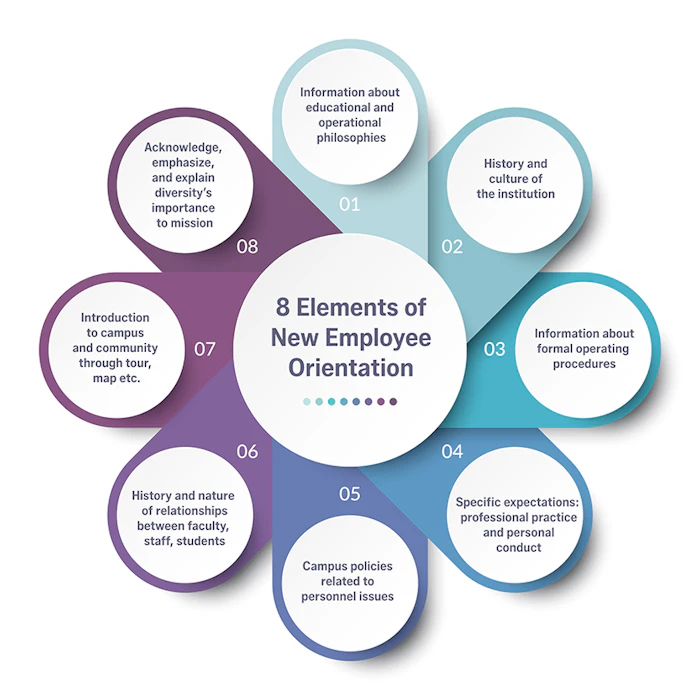
8 Elements of New Employee Orientation

Promising Practice #5: Technology Integration for Equity

Technology has the power to transform educational experiences, especially when applied to reduce inequities. Over the years, Most Promising Places are increasingly using technology to enhance learning and ensure equitable access and support for underserved students. AI-driven (artificial intelligence) tutoring systems and virtual office hours offer flexibility for students who might otherwise struggle to access academic resources. Data analytics also plays a key role, identifying achievement gaps and allowing colleges to provide targeted interventions for students who need extra help. Institutions that prioritize technology integration to promote equity create an academic learning environment where all students, regardless of their background, have the tools they need to succeed inside and outside the classroom.

THERE'S NO "I" IN MPPWCC: IT TAKES TEAMWORK TO DO THIS WORK

Our team gets this question all the time: who’s responsible for the institution "winning" the MPPWCC award? This question has been raised by governing board members, community college presidents, vice presidents, and, in some cases, from senior student affairs officers themselves. Usually, the question seeks to identify the single person or office that deserves credit for earning this national recognition. After nearly a decade of leading this project, here’s what we as Co-PIs have learned: “There’s no ‘I’ in MPPWCC” and there’s good reason for it. Earning this national recognition requires true teamwork and winning institutions make it a campus-wide priority.

It may sound cliché, but achieving diversity is truly everyone’s job. No single person or unit can do it all, nor should they. It takes a village — well, a team — to promote diversity, achieve equity, foster inclusion, pursue justice, and boost belonging in higher education workplaces, including our nation’s more than 2,000 community colleges. These terms must be more than buzzwords and deeply infuse day-to-day operations, campus policies, HRTM practices, and business intelligence. Winning institutions know the difference between them and use that understanding to bring talented people in as staff and leaders, to remove systemic barriers that shut some people out, and create inclusive practices to ensure that all staff members feel heard, seen, and visible as reflected in the institution’s staff profile, equitable pay structure, core values, and DEI commitments, to give a few examples.

Promising Places to Work create a culture of evidence-based decision-making that leads to implementation, experimentation, and even revision of promising practices, policies, and programs like those mentioned in this year’s report. It’s not that they do one thing well or depend on a single office or person, but rather they have developed a constellation of supportive policies, equity-minded practices, and cutting-edge DEI programs that provide community college employees with a positive work environment, equitable pay, opportunities for advancement, and meaningful work that contributes to the institution’s bottom line and their personal/professional goals.

On many campuses, promising practices, programs, and services are "housed" across divisions. They’re in human resources and talent management. Diversity and inclusion. Academic and student affairs. Athletics and intramural sports, to name a few. So, the answer to the question, "who’s responsible," is simple: everyone! When the institution wins, everyone wins.

Again, congratulations to this year’s highly selective set of Most Promising Places to Work in Community Colleges!

ENGAGE US ON SOCIAL MEDIA

We invite readers to share with us how they’re using this year’s report of Most Promising Places to Work in Community Colleges (MPPWCC). Share with us on Twitter, Facebook, or Instagram using #PPWCC26 and tag @TheEDULedger and @NISOD.

Past editions of this annual report have been used by:

  • Accrediting agencies
  • Employers
  • Human resource managers
  • Job Seekers
  • Professional associations
  • Instructional Faculty

BIOGRAPHIES

Dr. Terrell Strayhorn is professor of education and psychology at Virginia Union University (VUU), where he also serves as director of research in the Center for the Study of HBCUs. Given his expertise in higher education, psychology, and his consequential research on sense of belonging, HBCUs, and minoritized populations, Strayhorn has visiting or adjunct appointments at several access-driven institutions. Author of many books and over 250 journal articles, chapters, and reports, Strayhorn is an internationally recognized student success expert, equity researcher, and public speaker whose work focuses unapologetically on our most difficult subjects, Diverse: Issues in Higher Education named Strayhorn an Emerging Scholar, and he has received ACPA’s Emerging Scholar, Annuit Coeptis, and Diamond Honoree Awards. @tlstrayhorn

Dr. Royel Johnson is associate professor of education and social work at the University of Southern California, where he also serves as director of the National Assessment of Collegiate Campus Climates at the USC Race and Equity Center. Johnson is a nationally recognized expert on issues of educational access, racial equity, and student success. His work focuses on Black and institutionally marginalized populations like those impacted by the criminal punishment, child welfare, and inequitable educational systems. He has published over 50 academic publications, and several books such as Racial Equity on College Campuses. He’s been recognized by ACPA as both an Emerging Scholar and Diamond Honoree.

The project also benefited from the contributions of many others over the course of time who have helped contact administrators, write institutional profiles, and elicit quotations from personnel at featured institutions. These include (in alphabetical order): Stanley Gates, J’Quen Johnson, Gabriel Kim, Shay Merritte, Danny Ndungu, Anton Smith, Tiffany Steele, Daniel Thomas, and Catherine Wang. Incredibly talented administrative staff have helped organize files, reply to inquiries, and setup reports including TeNita Freeman, J’Quen Johnson, and Dina Maculada.


Most Promising Place to Work in Community College Profiles


Now more than ever community colleges not only serve their students but also their communities. Student success enhances the lives of students and their families as well as businesses, industries and others who engage with the colleges.

The last six years have brought challenges as community colleges rebound from the pandemic. There have also been exciting new developments, such as artificial intelligence, and meaningful collaborations with the private and public sectors. GateWay Community College in Phoenix, Ariz., had six employees offer their thoughts on the college’s strengths, and their combined reply reflects the overall impact of community colleges, regardless of location.

“We navigate obstacles through a solutions-oriented mindset, utilizing frequent, transparent communication and flexible support to ensure every employee feels valued professionally and personally,” notes GateWay.

Bergen Community College

Bergen Community College

“Since Bergen’s founding, faculty, staff and administrators have sought to uphold the highest standard of institutional excellence supported by an ethic of care for the community, our students and each other,” says Dr. Eric M. Friedman, president of Bergen Community College (BCC), the largest community college in New Jersey.

Over the last six years, BCC has revamped its participatory and shared governance structure to ensure open, consistent and clear communication in which challenges are acknowledged and all voices are represented. “Our faculty and staff represent Bergen’s most important resource,” says Friedman. “It remains incumbent on us to support them as we navigate myriad external pressures that impact their professional and personal lives.”

Brunswick Community College

Brunswick Community College

A public community college on the coast of southeastern North Carolina, Brunswick Community College serves more than 5,000 curriculum students, offering a wide range of programs with an intentional focus on student success. Collaboration is key and there is a genuine open-door environment and approachable leadership.

“Our mission to provide accessible, high-quality, student-centered programs guides our daily work,” says Dr. David L. Townsend, vice president of academic affairs and chief academic officer. “You see it in our Early College, strong dual enrollment partnerships, seamless university transfer pathways, and diverse continuing education offerings. Our students bring resilience and ‘Dolphin pride,’ which energizes our faculty and staff.”

Century College

Century College

A member of the Minnesota State system, Century College in White Bear Lake offers numerous in-person and online degrees and programs, ranging from accounting to welding. The Center for Professional Development and Collaboration creates opportunities for employees across the college to learn together, grow professionally and strengthen their ability to serve students and the community.

“The last six years have tested higher education in many ways, and like many colleges, we have had to navigate significant change, uncertainty and complexity,” says President Angelia N. Millender. “At Century College, we … know that positivity is not about minimizing challenges. It is about staying grounded in purpose, supporting one another and continuing to move forward.”

Coconino Community College

Coconino Community College

Coconino Community College (CCC) has been named one of the top 200 community colleges in the nation eligible for the Aspen Prize for Community College Excellence. With several locations in the Flagstaff, Ariz., area, CCC offers more than 50 associate degrees and certificates, and its close relationship with Northern Arizona University eases transfers. Collaboration with employers in the area facilitates training and workforce development.

Dr. Adriana Flores-Church, vice president of human resources, notes there is strong alignment between mission and personnel. “This alignment has been further strengthened through intentional efforts such as our participation in Achieving the Dream and the adoption of the Wildly Important Goal framework, both of which promote clarity, collaboration and continuous improvement,” she says.

College of Southern Maryland

College of Southern Maryland

People and purpose make College of Southern Maryland (CSM) an outstanding place to work, notes its president, Dr. Yolanda S. Wilson. A public institution with four campuses, its employees are deeply committed to student success, which is backed up by data. In 2024, the college participated in the PACE Climate Survey for Community Colleges, conducted by the Belk Center for Community College Leadership and Research at North Carolina State University.

“Results showed that employees feel a strong connection between their roles and the college’s mission, have confidence in their supervisors, and view student needs as central to the institution’s work,” says Wilson. “Employees also recognize CSM’s commitment to inclusivity and a strong sense of teamwork across the institution.”

College of Southern Nevada

College of Southern Nevada

The College of Southern Nevada (CSN) is part of the Nevada System of Higher Education and the largest community college in the state. Founded in 1971, it offers not only two-year degrees and certificate programs, but also a select number of bachelor’s degrees in specialized fields.

“At CSN, excellence is at the forefront of how we operate—excellence is part of the institution’s values,” says India Burton, chief human resources officer. “CSN is a place where people are supported, valued and empowered to do their best work every day, allowing our students to achieve, succeed and prosper.”

Community College of Allegheny County

Community College of Allegheny County

The Community College of Allegheny County (CCAC) in Pittsburgh, Pa., is a multi-campus institution with a decisive commitment to student success and community engagement, which fosters a strong sense of purpose among its employees. “The college’s diverse campus locations create a dynamic and inclusive environment where individuals from different backgrounds collaborate and engage with one another,” says Dr. Quintin Bullock, CCAC’s president.

CCAC supports professional growth and provides opportunities for continuous learning, skills development and career advancement. “The institution’s dedication to innovation in teaching and learning also encourages creativity, innovation and adaptability among faculty and staff,” says Bullock.

Community College of Aurora

Community College of Aurora

The Community College of Aurora (CCA) is a public institution in Colorado and at CCA students are able to earn degrees and certificates in 20 different fields. Dr. Mordecai Brownlee, CCA’s president, and Erica Hines, CCA’s chief human resources & personnel success officer, describe the college as mission-driven where people and students center everything. Administration, faculty and staff have worked together during the last six years, remaining committed to student success in times of uncertainty.

“We are intentional about creating a culture grounded in belonging, meaning and shared purpose,” says Brownlee. “We prioritize transparency, feedback and continuous improvement, using data to inform our decisions and foster open, honest communication — even when the conversations are challenging.”

Garden City Community College

Garden City Community College

Located in Kansas, Garden City Community College (GCCC) is a public institution more than 100 years old. There are students there preparing to transfer to four-year institutions and others building career skills. The college has found ways to incorporate employee wellness into programming, including physical, mental and social wellbeing.

“We live and serve in the same community, and we share a calling and purpose to improve it through education, training and workforce development,” says Dr. Ryan J. Ruda, president and CEO of GCCC. “There is a strong focus on professional development and providing opportunities to grow and learn in our professions so we can best serve our students and community.”

GateWay Community College (Ariz.)

GateWay Community College (Ariz.)

Part of the Maricopa Community Colleges, GateWay Community College in Phoenix was established as the first technical college in Arizona. Since its founding, it has served the diverse and changing needs of its students. It leans into its identity as a “College of Well-being” with socialization events such as wellness walks around campus.

“Across all levels from frontline staff to executive leadership, our team is unified by a mission-driven purpose that treats student success as a mutual victory,” notes a combined answer from six staffers. “This collaborative spirit is bolstered by a leadership team that prioritizes transparency, inclusion and professional respect, ensuring every voice is heard.”

HACC, Central Pennsylvania’s Community College

HACC, Central Pennsylvania’s Community College

“In addition to recognizing achievements, HACC [Central Pennsylvania’s Community College] provides plentiful professional opportunities. We foster growth by offering leadership roles, engaging employees in committee work, and delivering robust development programs,” says Dr. John J. “Ski” Sygielski, president and CEO of HACC, which offers more than 100 programs across five campuses.

“Leadership is accessible, responsive and promotes candid communication and encourages the exchange of new ideas. The college emphasizes work-life balance by providing flexible scheduling and wellness programs,” says Sygielski. Employee options include remote and hybrid work and compressed scheduling. Wellness offerings include on-campus fitness classes, ergonomic workspace consultations and wellness challenges throughout the year.

Houston City College

Houston City College

“We focus on communication, connection and shared purpose,” says Dr. Margaret Ford Fisher, chancellor, Houston City College (HCC). “Leadership engages employees through listening tours, transparent updates and opportunities for feedback. The addition of a staff senate, alongside the faculty senate, strengthens shared governance and employee voice.”

HCC is a public community college system that operates schools in multiple locations in the Houston area. It offers affordable education for academic advancement, workforce training, career development and lifelong learning. Faculty and staff experience a collaborative, team-oriented culture and an inclusive environment reflective of Houston. “By reinforcing how each role contributes to student success … and providing recognition and growth opportunities, we sustain trust, morale and a positive workplace culture,” says Fisher.

Hudson County Community College

Hudson County Community College

Located in Jersey City, N.J., Hudson County Community College (HCCC) offers both associate degrees and certificate programs with a range of options. At the core of HCCC’s workplace culture is a commitment to employee growth and development. Full-time employees are eligible for up to $9,000 per fiscal year in tuition reimbursement and professional development funding, which can be used for degree programs, certifications, conferences and other learning opportunities.

“This investment signals that the college not only values its employees’ current contributions but is equally committed to their long-term career advancement,” says Amaalah Ogburn, director of employee and labor relations. “Initiatives such as Professional Development Day, employee recognition programs like ‘Hudson Is Home,’ and cross-department collaborations create opportunities for connection, celebration and shared purpose.”

Joliet Junior College

Joliet Junior College

Joliet Junior College (JJC) is the first public community college in the U.S. Today, it serves approximately 48,000 students per year across three campuses and three centers, who enroll in the college’s academic and non-credit programs.

“Amid the challenges of the past six years, JJC has maintained a positive work environment by prioritizing clear communication, flexibility and empathy — remaining focused on connection, wellbeing and shared purpose during times of change,” says Judy Connelly, JJC’s chief human resource officer. “Employees are united by a shared commitment to student success, supported by leadership that values people as whole individuals and recognizes the connection between wellbeing and professional growth.”

Lamar Institute of Technology

Lamar Institute of Technology

Lamar Institute of Technology (LIT) is a public technical school in Beaumont, Tex. It has over 8,000 students, pursuing credit and non-credit in more than 50 programs in areas such as allied health, business, industry and public service.

“There is a spirit of teamwork, where we work together to achieve our goals and solve challenges,” says Dr. Angela Hill, LIT’s provost and vice president for instruction. “We are not a collection of departments working in silos; we are a team united around student success. … We’ve made a conscious effort to listen to employees, respond to their needs, put their ideas into motion, and that has helped us keep the momentum and continue to impact our students in Southeast Texas.”

Malcolm X College

Malcolm X College

“As a leader at Malcolm X College, I work to cultivate an environment that is inclusive and rooted in building community every day,” says Dr. David A. Sanders, Malcolm X College’s president. “What truly distinguishes Malcolm X College is the powerful connection between faculty, staff and the communities we serve.”

Part of City Colleges of Chicago, Malcolm X College works closely with healthcare and industry partners. Sanders notes that it has “its clear and purposeful mission to educate and inspire the next generation of healthcare professionals.” Given the challenges of the past few years, especially in healthcare, Sanders says it has taken intentional effort to remain positive. This includes communication, a culture of care, resilience and shared purpose.

McLennan Community College

McLennan Community College

The students of McLennan Community College (MCC), located in Waco, Tex., are pursuing diverse paths — preparing to transfer to a four-year institution, earning associate degrees that will make them career-ready and others earning certificates to enhance their skills or jump-start a career.

“Employees are supported through collaborative leadership, professional development opportunities and a culture that values both innovation and accountability,” says Missy Kittner, chief human resources officer. “The college fosters an environment where contributions are recognized, ideas are welcomed and individuals feel connected to a mission that truly impacts lives. … By recognizing accomplishments, celebrating small wins and remaining adaptable, we’ve been able to sustain a culture of resilience and positivity.”

Montgomery County Community College

Montgomery County Community College

“More than just a workplace, Montgomery County Community College (MCCC) is a place where people come together to inspire, lead and transform lives and futures — one interaction at a time,” says Dr. Vicki Bastecki-Perez, MCCC’s president. “We intentionally prioritize employee wellbeing, professional development and a strong sense of belonging. By keeping our mission and vision at the forefront of everything we do, we create clarity and shared purpose, even in uncertain times.”

Founded in 1964, MCCC in Pennsylvania has a main campus and two satellite campuses. The college has had online classes for over 25 years. “Our faculty and staff work collaboratively to advance the goals of our strategic plan, allowing us to navigate change together and support one another,” says Bastecki-Perez.

Northeast Lakeview College

Northeast Lakeview College

Part of the Alamo Colleges District in Texas, Northeast Lakeview College (NLC) was founded in 2007. It offers associate degree programs, certificates and continuing education. “Northeast Lakeview College is committed to the wellbeing of the whole person and utilizes feedback from students and employees for decision making, strengthening two-way communication and understanding,” says Dr. Veronica Garcia, president.

The college celebrates accomplishments and thrives on the positive energy that the entire NLC community brings to campus. The Caring Campus principles ensure that employees remain motivated and inspired. “We continue to be inspired by changing lives through learning,” says Garcia.

Northeast Mississippi Community College

Northeast Mississippi Community College

A public community college in Booneville, Northeast Mississippi Community College was founded in 1948. It offers transfer, career and technical courses in day, evening, weekend and online formats. A strong sense of community among faculty and staff make it easier to work together in addressing challenges, says Dr. Ricky G. Ford, president.

There are opportunities for professional development, flexible scheduling, mental health resources and acknowledgement of major milestones as well as small wins. “This coincides with my vision of creating a great workplace environment where everyone is appreciated and valued,” says Ford. “Creating an environment where everyone looks forward to coming to work is one of my most important goals and responsibilities.”

Northern Essex Community College

Northern Essex Community College

Northern Essex Community College (NECC) serves more than 5,000 students across campuses in Lawrence and Haverhill, Mass. The college is committed to providing accessible and affordable education through more than 67 degree and certificate programs and addressing the needs of the state and local workforce.

“The institutional support for new ideas keeps employees engaged and eager to grow,” says Brooke Brown-Saracino, assistant director of employee engagement. “NECC intentionally builds an environment where employee excellence, equity, strengths-based leadership, and community impact are woven into every facet of its culture. The college embodies all four Promising Practices — recognition, community commitment, professional development and high-quality orientation.”

NorthWest Arkansas Community College

NorthWest Arkansas Community College

NorthWest Arkansas Community College is a public community college founded in 1989. Its main campus is in Bentonville and there are affiliate campuses offering a culinary school and a nursing program. The college offers a range of associate degree and certificate programs in fields such as business, computer science, art, communications, engineering, construction and criminal justice.

Programs are meant to serve short-term and long-term needs. Students are both new to college and returning students. In addition to in-person, there are online options, and students work with passionate educators, experienced staff and caring advisors.

Olive-Harvey College

Olive-Harvey College

Part of City Colleges of Chicago, Olive-Harvey College’s community focus begins with its name, which comes from two Chicagoans, Milton Olive III and Carmel B. Harvey, who lost their lives in the Vietnam War. Faculty and staff are not only educators and professionals; they are mentors, advocates and partners in advancing opportunity and social mobility.

“Maintaining a positive work environment in the years following the pandemic has meant leaning into flexibility, open communication and a shared sense of purpose,” says Dr. Kimberly Hollingsworth, president. “We have emphasized transparency and regular engagement with faculty and staff, ensuring people are supported as challenges arise. Olive-Harvey continues to invest in professional development, wellness resources and collaborative initiatives that strengthen connection across departments, while also celebrating staff and faculty achievements and student successes.”

Southeast New Mexico College

Southeast New Mexico College

With roots going back to 1950, Southeast New Mexico College (SENMC) in Carlsbad became an independent public institution in 2021. It offers associate degrees and certificate programs as well as providing business and industry training in Eddy County. Its culture of belonging and service, paired with a clear commitment to workforce and community impact, empowers and inspires the college’s employees.

“Guided by its mission to serve diverse students, communities and industry, and grounded in its PRIDE (Persistence, Resilience, Inclusion, Diversity and Excellence) values, the college creates an environment where employees feel valued and connected to a larger purpose,” says Steven Gonzales, director of human resources. “SENMC prioritizes professional growth, transparent communication and work-life balance, ensuring employees are supported both personally and professionally.”

St. Philip’s College

St. Philip’s College

“Maintaining a positive culture amidst global and institutional shifts has required an unwavering commitment to our … shared mission, vision and core values,” says Dr. Adena Williams Loston, president of St. Philip’s College, a historically Black public community college. “Our focus remains on the Persistence Pipeline, utilizing emotional intelligence (EQ) behaviors and reporting to simplify complex challenges and maintain clarity.”

St. Philip’s is defined by a culture of camaraderie and the sense that every employee, including faculty and staff, understands how their role directly contributes to student success and community advancement. “What truly sets us apart is our commitment to the Caring Campus initiative and our adherence to principles of leadership that emphasize accountability, collaboration and empathy,” says Williams Loston.

Tallahassee State College

Tallahassee State College

Marking 60 years this year, Tallahassee State College (TSC) is part of the Florida College System. It offers pathway programs to several four-year institutions in the area, including Florida State University and Florida A&M University. TSC invests in its team, dedicating 1% of its overall budget to professional development.

“We have built a culture where individuals at every level of the college feel valued, supported and connected to our mission. Our faculty and staff understand that their work changes lives, and that sense of purpose is powerful,” says Dr. Jim Murdaugh, president. “All of our employees have access to meaningful opportunities to learn and grow.”

Weatherford College

Weatherford College

“It is a great privilege to be a member of the academy and to work at Weatherford College,” says Dr. Tod Allen Farmer, president of the public institution located in Texas, which has two campuses. “We get to make this world an even better place every day. Our people are genuinely valued and appreciated, and more importantly, their work truly makes a difference in the lives of our students.”

There is a team mindset. The faculty, staff and administration come from all walks of life and add value to the college and the community. “Built on a culture of caring, our people care about our students and each other,” Farmer says.

InstitutionCampus TypeEnrollment
Bergen Community CollegeHSI10,000-14,999
Brunswick Community CollegePWI1,000-4,999
Century CollegeNAS1,000-4,999
Coconino Community CollegeNAS1,000-4,999
College of Southern MarylandPWI10,000-14,999
College of Southern NevadaHSI20,000 or more
Community College of Allegheny CountyPWI10,000-14,999
Community College of AuroraHSI10,000-14,999
Garden City Community CollegeHSI1,000-4,999
GateWay Community College (AZ)HSI5,000-9,999
HACC, Central Pennsylvania’s Community CollegeN/A10,000-14,999
Houston City CollegeHSI20,000 or more
Hudson County Community CollegeHSI5,000-9,999
Joliet Junior CollegeHSI10,000-14,999
Lamar Institute of TechnologyN/A5,000-9,999
Malcolm X CollegePBI15,000-19,999
McLennan Community CollegeHSI5,000-9,999
Montgomery County Community CollegePWI15,000-19,999
Northeast Lakeview CollegeHSI10,000-14,999
Northeast MississippiPWI1,000-4,999
Northern Essex Community CollegeHSI5,000-9,999
Northwest Arkansas Community CollegeN/A5,000-9,999
Olive-Harvey CollegePBI5,000-9,999
Southeast New Mexico CollegeHSI1,000-4,999
St. Philip’s CollegeHSI20,000 or more
Tallahassee State CollegeHSI10,000-14,999
Weatherford CollegeN/A5,000-9,999
InstitutionSick LeaveDisability LeaveVacationPersonal LeaveEducation LeaveFamily Care Leave
Bergen Community CollegeYESYESYESYESYESYES
Brunswick Community CollegeYESYESYESYESYESYES
Century CollegeYESYESYESYESYESYES
Coconino Community CollegeYESNOYESYESYESYES
College of Southern MarylandYESYESYESYESYESYES
College of Southern NevadaYESNOYESYESYESYES
Community College of Allegheny CountyYESYESYESYESYESYES
Community College of AuroraYESYESYESYESNOYES
Garden City Community CollegeYESYESYESYESYESYES
GateWay Community College (AZ)YESYESYESYESYESYES
HACC, Central Pennsylvania’s Community CollegeYESYESYESYESNOYES
Houston City CollegeYESYESNOYESYESYES
Hudson County Community CollegeYESYESYESYESYESYES
Joliet Junior CollegeYESYESYESYESYESYES
Lamar Institute of TechnologyYESYESYESYESYESYES
Malcolm X CollegeYESYESYESYESYESYES
McLennan Community CollegeYESYESYESYESYESYES
Montgomery County Community CollegeYESYESYESYESYESYES
Northeast Lakeview CollegeYESYESYESYESNOYES
Northeast MississippiYESYESYESYESYESYES
Northern Essex Community CollegeYESYESYESYESYESYES
Northwest Arkansas Community CollegeYESYESYESYESYESYES
Olive-Harvey CollegeYESYESYESYESYESYES
Southeast New Mexico CollegeYESYESYESYESYESYES
St. Philip’s CollegeYESYESYESYESYESYES
Tallahassee State CollegeYESYESYESYESYESYES
Weatherford CollegeYESYESYESYESNOYES
InstitutionFlex WorkCompress WorkJob-ShareTelecommutingStress Reduction Program
Bergen Community CollegeNONONONOYES
Brunswick Community CollegeYESNONONOYES
Century CollegeYESYESNOYESYES
Coconino Community CollegeYESYESNOYESYES
College of Southern MarylandYESYESYESYESYES
College of Southern NevadaYESNONOYESYES
Community College of Allegheny CountyYESYESNOYESYES
Community College of AuroraYESYESNOYESYES
Garden City Community CollegeYESYESNOYESYES
GateWay Community College (AZ)YESYESNOYESYES
HACC, Central Pennsylvania’s Community CollegeYESYESYESYESYES
Houston City CollegeYESNOYESNOYES
Hudson County Community CollegeYESNONOYESYES
Joliet Junior CollegeYESNONOYESYES
Lamar Institute of TechnologyYESYESNOYESNO
Malcolm X CollegeYESYESNONOYES
McLennan Community CollegeYESYESNOYESYES
Montgomery County Community CollegeYESYESNOYESYES
Northeast Lakeview CollegeYESNONOYESYES
Northeast MississippiNONONONOYES
Northern Essex Community CollegeYESNOYESYESYES
Northwest Arkansas Community CollegeYESYESNONOYES
Olive-Harvey CollegeYESYESNOYESYES
Southeast New Mexico CollegeYESYESNOYESYES
St. Philip’s CollegeYESYESNOYESYES
Tallahassee State CollegeYESYESNOYESYES
Weatherford CollegeYESYESNONOYES
InstitutionFormal System for Receiving Reports of DiscriminationResponds to Reports of Discrimination in Timely MannerInclusive Environment for Underrepresented FacultyInclusive Environment for Underrepresented Staff
Bergen Community CollegeYESYESYESYES
Brunswick Community CollegeYESYESYESYES
Century CollegeYESYESYESYES
Coconino Community CollegeYESYESYESYES
College of Southern MarylandYESYESYESYES
College of Southern NevadaYESYESYESYES
Community College of Allegheny CountyYESYESYESYES
Community College of AuroraYESYESYESYES
Garden City Community CollegeYESYESYESYES
GateWay Community College (AZ)YESYESYESYES
HACC, Central Pennsylvania’s Community CollegeYESYESYESYES
Houston City CollegeYESYESYESYES
Hudson County Community CollegeYESYESYESYES
Joliet Junior CollegeYESYESYESYES
Lamar Institute of TechnologyYESYESYESYES
Malcolm X CollegeYESYESYESYES
McLennan Community CollegeYESYESYESYES
Montgomery County Community CollegeYESYESYESYES
Northeast Lakeview CollegeYESYESYESYES
Northeast MississippiYESYESYESYES
Northern Essex Community CollegeYESYESYESYES
Northwest Arkansas Community CollegeYESYESYESYES
Olive-Harvey CollegeYESYESYESYES
Southeast New Mexico CollegeYESYESYESYES
St. Philip’s CollegeYESYESYESYES
Tallahassee State CollegeYESYESYESYES
Weatherford CollegeYESYESYESYES
InstitutionFaculty Recruitment and RetentionStaff Recruitment and RetentionStudent Recruitment and RetentionInclusive Learning and Work Environments
Bergen Community CollegeYESYESYESYES
Brunswick Community CollegeYESYESYESYES
Century CollegeYESYESYESYES
Coconino Community CollegeYESYESYESYES
College of Southern MarylandYESYESYESYES
College of Southern NevadaYESYESYESYES
Community College of Allegheny CountyYESYESYESYES
Community College of AuroraYESYESYESYES
Garden City Community CollegeYESYESYESYES
GateWay Community College (AZ)YESYESYESYES
HACC, Central Pennsylvania’s Community CollegeYESYESYESYES
Houston City CollegeNONOYESNO
Hudson County Community CollegeYESYESYESYES
Joliet Junior CollegeYESYESYESYES
Lamar Institute of TechnologyYESYESYESYES
Malcolm X CollegeYESYESYESYES
McLennan Community CollegeYESYESYESYES
Montgomery County Community CollegeYESYESYESYES
Northeast Lakeview CollegeYESYESYESYES
Northeast MississippiYESYESYESYES
Northern Essex Community CollegeYESYESYESYES
Northwest Arkansas Community CollegeYESYESYESYES
Olive-Harvey CollegeYESYESYESYES
Southeast New Mexico CollegeYESYESYESYES
St. Philip’s CollegeYESYESYESYES
Tallahassee State CollegeYESYESYESYES
Weatherford CollegeYESYESYESYES