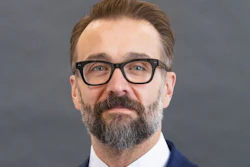
"Georgetown brings together so many different parts of my personality and experience—my Catholic faith and my commitment to the Catholic intellectual tradition as well as my career at research institutions like Cornell and University of Chicago,” says Eduardo M. Peñalver, who became the 49th president of Georgetown University on July 1, 2026, the first Latino and second lay person to hold the position.
“Georgetown’s Jesuit, Catholic values are not just talking points,” Peñalver explains. “They are woven into every aspect of its life. This is an exciting moment in Georgetown’s history — with the bold expansion of the Capitol Campus, the creation of new, interdisciplinary programs, a renewed focus on access and affordability, and a commitment to finding innovative solutions to our society’s most pressing issues. It’s a deep honor and an exciting opportunity to be entrusted with the privilege of serving as Georgetown’s president.”
Log in to view the full article
"Georgetown brings together so many different parts of my personality and experience—my Catholic faith and my commitment to the Catholic intellectual tradition as well as my career at research institutions like Cornell and University of Chicago,” says Eduardo M. Peñalver, who became the 49th president of Georgetown University on July 1, 2026, the first Latino and second lay person to hold the position.
“Georgetown’s Jesuit, Catholic values are not just talking points,” Peñalver explains. “They are woven into every aspect of its life. This is an exciting moment in Georgetown’s history — with the bold expansion of the Capitol Campus, the creation of new, interdisciplinary programs, a renewed focus on access and affordability, and a commitment to finding innovative solutions to our society’s most pressing issues. It’s a deep honor and an exciting opportunity to be entrusted with the privilege of serving as Georgetown’s president.”
Peñalver is a prominent legal scholar, serving as dean of Cornell University’s Law School from 2014 to 2021. He has held faculty appointments at Cornell Law School, Fordham Law School, the University of Chicago Law School and visiting appointments at Harvard Law and Yale Law. He is a leading scholar on property and land use law as well as the intersection of law and religion.
Legal training is great preparation for leadership roles, he notes. Serving clients and helping them achieve their goals being the essence of being a good attorney. Legal education prepares one to think strategically and break down problems into different components to test solutions.
These skills have served Peñalver as a leader. Prior to his presidency at Georgetown, he was president of Seattle University (2021–26), which is also a Jesuit institution. His faith is a grounding force, but he is also clear that Georgetown is an academic institution that values its autonomy and academic freedom.
“This is a pivotal moment for higher education; everything feels like it is under stress,” Peñalver says. “I see the greatest challenges to higher education as the changing relationship with the federal government, including around research funding; increasing political polarization; AI, and its impact on teaching, learning, assessment and research; and the perception that the cost of higher education is out of reach, especially for the middle class.
“For Georgetown, as a student-centered research institution in the Jesuit, Catholic tradition, we bring distinct advantages to our responses to each of these challenges,” he continues. “Our commitment to our Jesuit, Catholic values requires us to engage in thoughtful reflection on how best to align our practices with our deepest principles.”
Well aware of the renowned Georgetown Hoyas athletics tradition, particularly its basketball history, Peñalver eagerly looks forward to attending some games. “Earlier this year, I had the privilege of attending a ceremony rededicating a local Washington, D.C., high school for [the late] John Thompson Jr. (barrier breaking coach),” he says.
While Georgetown is a Catholic institution, it also has a deep commitment to interfaith dialogue and inclusion. It was the first Catholic university to employ a rabbi full-time in its campus ministry, and now also has a full-time Imam as well as chaplains in the Eastern Orthodox, Protestant and Dharmic traditions. Students are encouraged to explore their intellectual and spiritual development.
There is another aspect of Peñalver’s leadership that stands out. He is one of very few Hispanic university presidents to lead a predominantly white Research 1 institution that is not a designated Hispanic Serving Institution. He is familiar with being a first or only, as this has been recurring throughout his career. At Georgetown, for decades the student body has been more diverse than the faculty and administration, but that is slowly shifting to greater overall diversity.
“I’m aware of how my work gets viewed through the lens of diversity, and it’s important to me to be a positive role model and leader who can create opportunities for others who might question their sense of belonging in elite higher education,” says Peñalver, adding that teachers and leaders of diverse backgrounds were his role models. He cites Hispanic pioneers like Dr. Hector Velez at Cornell and (the late) Dr. Michael Olivas at the University of Houston along with mentors like Dr. Tim Borstelman and Dr. Mary Beth Norton at Cornell and Harold Koh and Guido Calabresi at Yale.
“If I can model strong and inclusive leadership, then my hope is that students of all backgrounds will see the exciting possibilities that exist for them to pursue careers in higher education and to continue that chain of mentorship and encouragement,” Peñalver says.
This story originally ran in The EDU Ledger's October 1, 2026 edition. Subscribe here for full access.