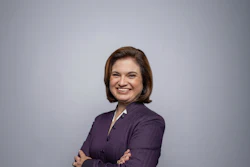
Dr. Marielena DeSanctis, chancellor of the Colorado Community College System (CCCS), describes herself as a woman of faith. “I believe very strongly that God gives us gifts, and we have the responsibility and obligation to use those gifts to do his will in the world,” says the woman who since October 2025 has overseen 13 community colleges at more than 35 locations educating over 130,000 students each year.
Such a position was not her vision when she was an engineer, an educator and leader in K–12 and higher education, or even as president of the Community College of Denver (CCD). Two months after her predecessor Joe Garcia announced his retirement, DeSanctis kept feeling a nudge and call that she needed to put her gifts into leading the 13-college system. “I was following what I truly believed to be God’s call for my life,” says DeSanctis, the daughter of a Cuban immigrant and the first Hispanic woman to lead the CCCS.
Log in to view the full article
Dr. Marielena DeSanctis, chancellor of the Colorado Community College System (CCCS), describes herself as a woman of faith. “I believe very strongly that God gives us gifts, and we have the responsibility and obligation to use those gifts to do his will in the world,” says the woman who since October 2025 has overseen 13 community colleges at more than 35 locations educating over 130,000 students each year.
Such a position was not her vision when she was an engineer, an educator and leader in K–12 and higher education, or even as president of the Community College of Denver (CCD). Two months after her predecessor Joe Garcia announced his retirement, DeSanctis kept feeling a nudge and call that she needed to put her gifts into leading the 13-college system. “I was following what I truly believed to be God’s call for my life,” says DeSanctis, the daughter of a Cuban immigrant and the first Hispanic woman to lead the CCCS.
A graduate of the Aspen Presidential Fellowship for Community College Excellence, at CCD and prior to that as provost and senior vice president of academic affairs and student services at Broward College, DeSanctis had the opportunity to see how different decisions—such as policy or organization of the student experience—directly affect the students. “It opens your eyes to things that have great impact on outcomes of students,” she says. “Then, at the chancellor level, how do you take those to scale…and leverage the things to success for the entire state.”
Colorado is a diverse state, with a busy metropolis like Denver and extremely rural areas, such as Rangely and Mancos. “Learners across Colorado want one thing, economic opportunity and sustainability for their family, and they want to have confidence that the education they are getting is going to get them there,” DeSanctis says. “That transcends everything, whether you’re sitting in Denver, Boulder, Colorado Springs or any of our rural or frontier areas. What is different is that each of our regions have different talent needs and our communities have different needs themselves.”
Education needs to be designed around possible constraints, like broadband access and transportation challenges that exist in some rural areas. Each college in the CCCS knows its community, and the system supports local expertise with shared capabilities and resources.
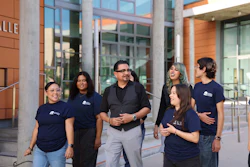
DeSanctis believes community colleges are the economic engine of any state. It is therefore necessary to serve a diverse range of students—from high schoolers doing concurrent enrollment to recent high school graduates to military veterans, adult learners and career changers.PHOTO COURTESY
“As the labor market is changing so rapidly, we’re finding more and more people that have baccalaureate degrees are coming back to a community college to upskill, reskill and change the trajectory of their career paths,” she says. “It’s a great place for employers to come and work with us to cocreate and covalidate learning. Our faculty are totally dedicated to teaching and learning.”
Adjunct instructors make up a considerable part of community college faculty and have voiced the desire to see expanded opportunities for full-time employment. As president of the CCD, DeSanctis made progress in increasing the pay for adjuncts as well as adding some full-time positions.
In her first year as chancellor, DeSanctis has traveled all over the state of Colorado, listening to the people and then establishing a clear direction for the future. It is important that first-generation students find higher education accessible. Specific student needs vary depending on a college’s location, and the CCCS supports presidents in providing for their students.
“I’ve been really encouraged by our colleges’ willingness to think collectively and lean into the power of 13,” she notes. “How we as a system take on some of the administrative tasks that 13 colleges are doing individually so they can turn their attention to what matters most, our students. Also, how we take best practices from our colleges and scale those to all of our colleges.”
DeSanctis derives great satisfaction from the outpouring of support and partnership from employers, who are excited about co-designing degrees with the colleges. With ever changing technology, these close alliances are crucial to successful student outcomes.
“Having the opportunity to have substantive conversations with employers, who are themselves trying to keep up with the pace of change in their own industries is ever more important,” she says. “Our community colleges are on the front end of developing our Colorado talent marketplace.”
This story originally ran in The EDU Ledger's October 1, 2026 edition. Subscribe here for full access.